
The Inheritance I Never Expected
The WIWO origin story

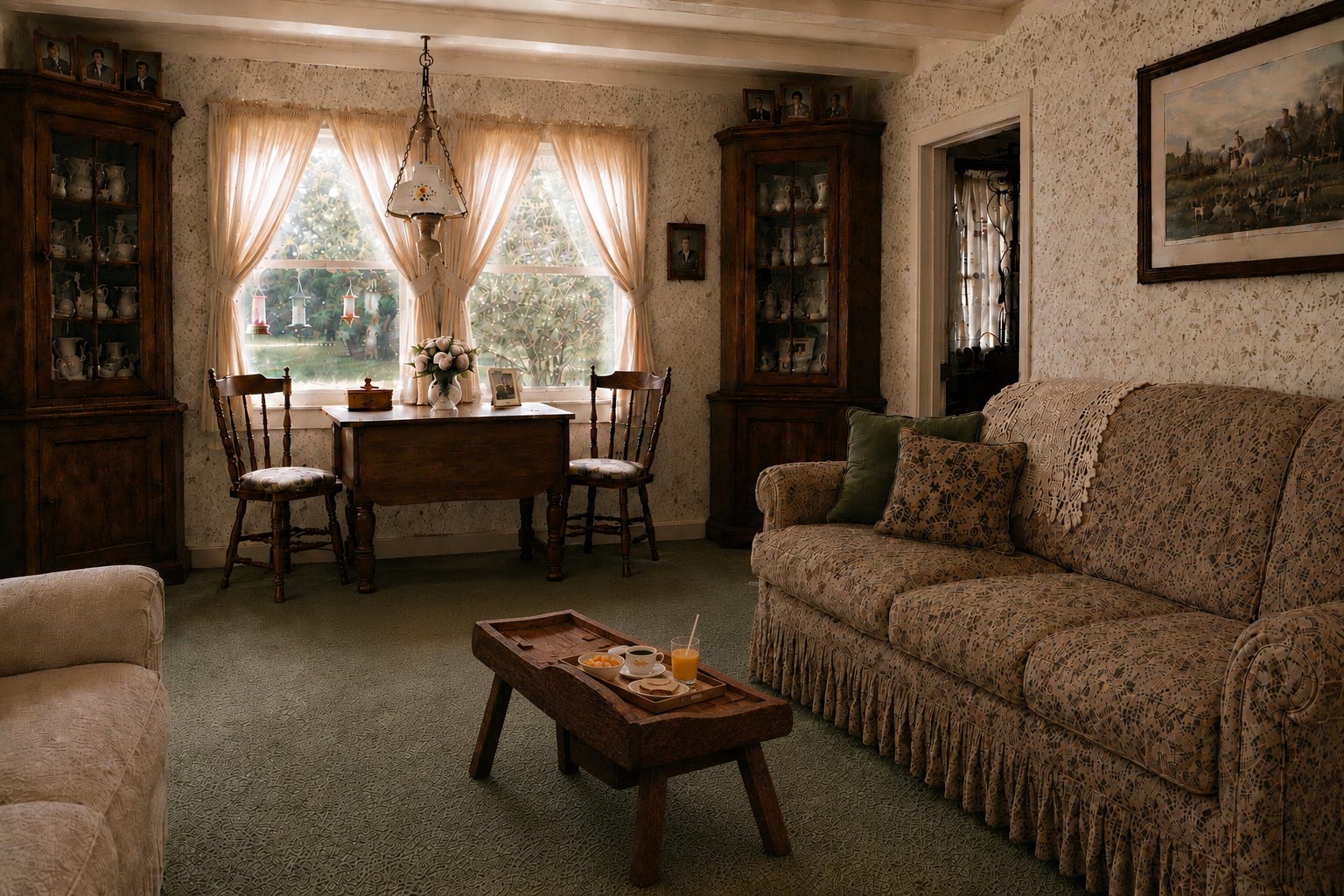
Every morning, my grandmother brought me the same breakfast on the same mid-century Hasko tray.
Dry toast.
Peaches.
Coffee.
And a glass of orange juice watered down with exactly two ice cubes and a straw.
She would carry it into what had once been the formal dining room of her colonial home and set it down beside me while we sat together on the couch.
The room smelled like Yardley Lily of the Valley perfume.
Outside, birds crowded the feeders hanging from a crabapple tree.
Long before flat-screen televisions existed, she had cut a hole through the wall and tucked the TV into a closet in the hallway next door. It seemed perfectly normal to me at the time. Looking back, it was exactly the sort of thing she would do.
Strong.
Practical.
Opinionated.
Entirely unconcerned with whether anyone else would have done it differently.
Between us sat what most people would have called a coffee table.
My grandmother would have corrected them.
It was an antique cobbler’s bench.
She always knew the history of things.
Not some things.
Everything.
A chair wasn’t a chair.
A painting wasn’t a painting.
A ring wasn’t a ring.
Everything had a story, and she seemed to know all of them.
The cobbler’s bench had another life before it became our coffee table. The fox hunting lithograph hanging on the wall had a story. The jewelry in her collection had stories. The old furniture, the paintings, the mirrors, the boxes tucked away in corners—all of it came from somewhere, belonged to someone, survived something.
In her world, nothing was ever just an object.
I didn’t realize how unusual that was when I was young.
I thought everybody grew up learning the history of furniture over morning coffee.
I thought everybody had someone explaining craftsmanship, restoration, and why original oil paintings mattered.
I thought everybody spent afternoons learning how to refinish furniture, identify hallmarks, or how to date an antique claw-foot drop-leaf table.
I thought everybody had a grandmother who could look at something another person had dismissed as junk and immediately see its value.
She had owned a store years before I was born.
The Dutch Door.
She was proud that she carried Hallmark cards and wrapping paper before they became what they are today. She sold cards, gifts, and unfinished furniture. She taught people how to see potential in things that weren’t finished yet.
Looking back, I think that may have been her greatest talent.
Seeing potential before everyone else did.
For as long as I can remember, she repeated the same warning.
“Never open a store.”
Not someday.
Not maybe.
Never.
She wasn’t joking.
She had lived it.
She knew how much work it was.
And for years, I promised her I wouldn’t.
I broke that promise.
Completely.
Not only did I open a store, I built an entire brand around the kinds of things she spent her life teaching me to appreciate.
The funny part is that I think WIWO started long before I ever registered a business name, sold a vintage item, or designed a logo.
It probably started on that couch.
With coffee.
With birds at the feeder.
With a cobbler’s bench between us.
With a woman who refused to see objects the way everyone else did.
What took me years to understand was that she wasn’t teaching me about antiques.
She was teaching me how to recognize value.
Not condition.
Not perfection.
Value.
Condition tells you how something looks.
Value tells you what it is.
And eventually, without realizing it, she taught me to see it in people too.
Maybe that’s why we understood each other so well.
We were each other’s priority for a long time.
Somewhere along the way, I stopped being just her granddaughter and became her caregiver.
Years ago, she was having heart rhythm problems and refused to go to the hospital.
I begged.
She argued.
I kept pushing.
Eventually she gave in.
It probably saved her life.
Later, she handed me a five-dollar bill with “MY LIFE” written across the front.
It was her way of saying thank you.
Mostly as a joke.
Mostly.
I still carry it with me.
Looking back, that five-dollar bill might be one of the most valuable things I own.
Not because of what it’s worth.
Because of what it represents.
A woman who taught me that stories matter.
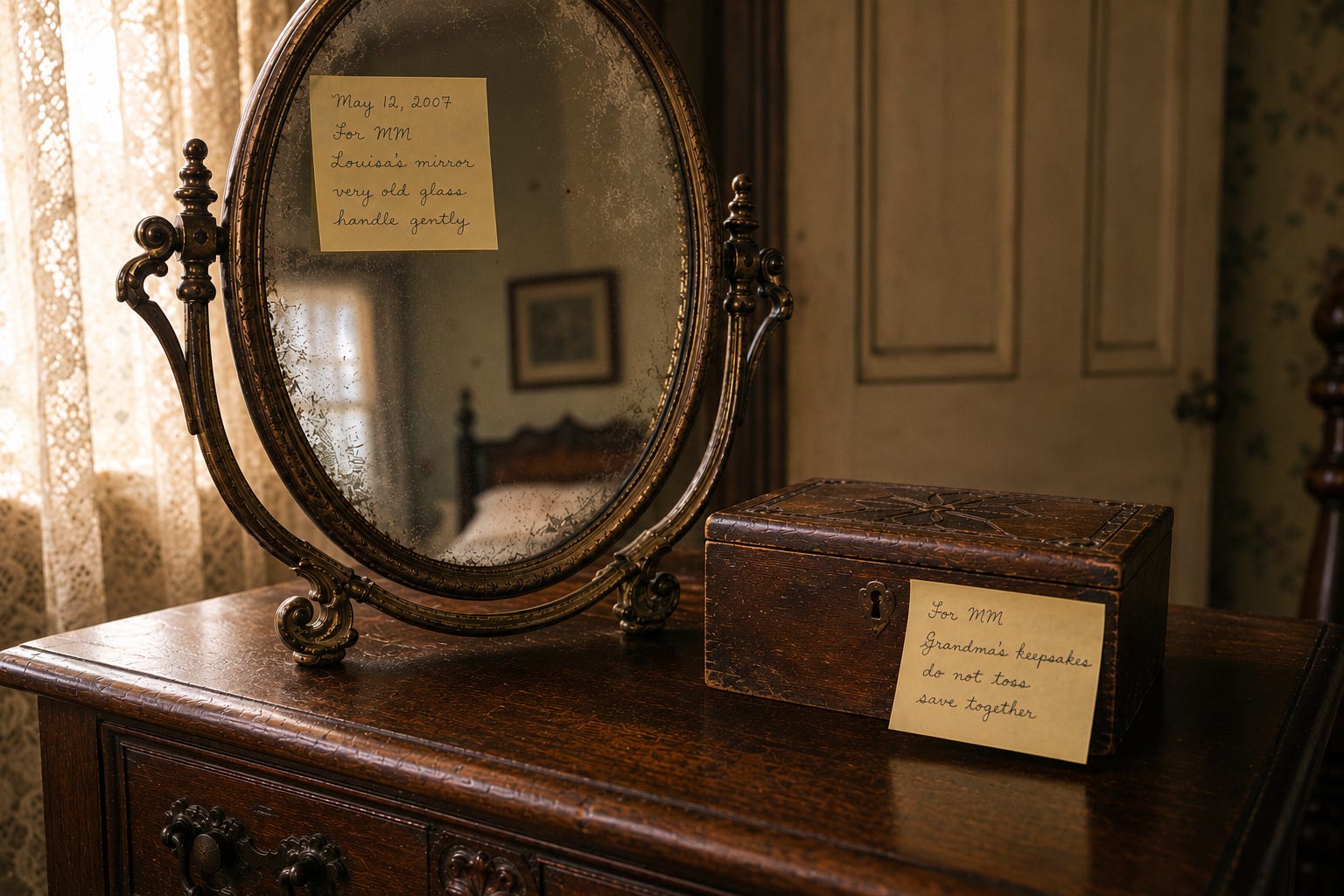
As she got older, she started putting yellow Post-It notes on things throughout the house.
Little handwritten notes.
Initials.
Names.
Instructions.
Quiet decisions about a future she knew she wouldn’t be around to see.
By then, I had been living with her for years. Most of the things without notes, she had already told me about.
“This goes to so-and-so.”
“Make sure they get that.”
“Your initials are on that one.”
At some point, I stopped seeing the notes as labels.
They felt more like stories.
The mirror she wanted someone to have.
The jewelry she wanted kept in the family.
The furniture she hoped would survive another generation.
She wasn’t just deciding where things would go.
She was deciding which stories would continue.
One of those notes was on an antique mirror.
My initials.
It wasn’t the most expensive piece in the house.
It wasn’t the rarest.
It was mine because she decided it should be.
That’s something I’ve thought about a lot over the years.
The things people fight over aren’t always the things that matter most.
Sometimes the most valuable thing in a room is simply knowing someone thought of you when they were deciding what would remain after they were gone.
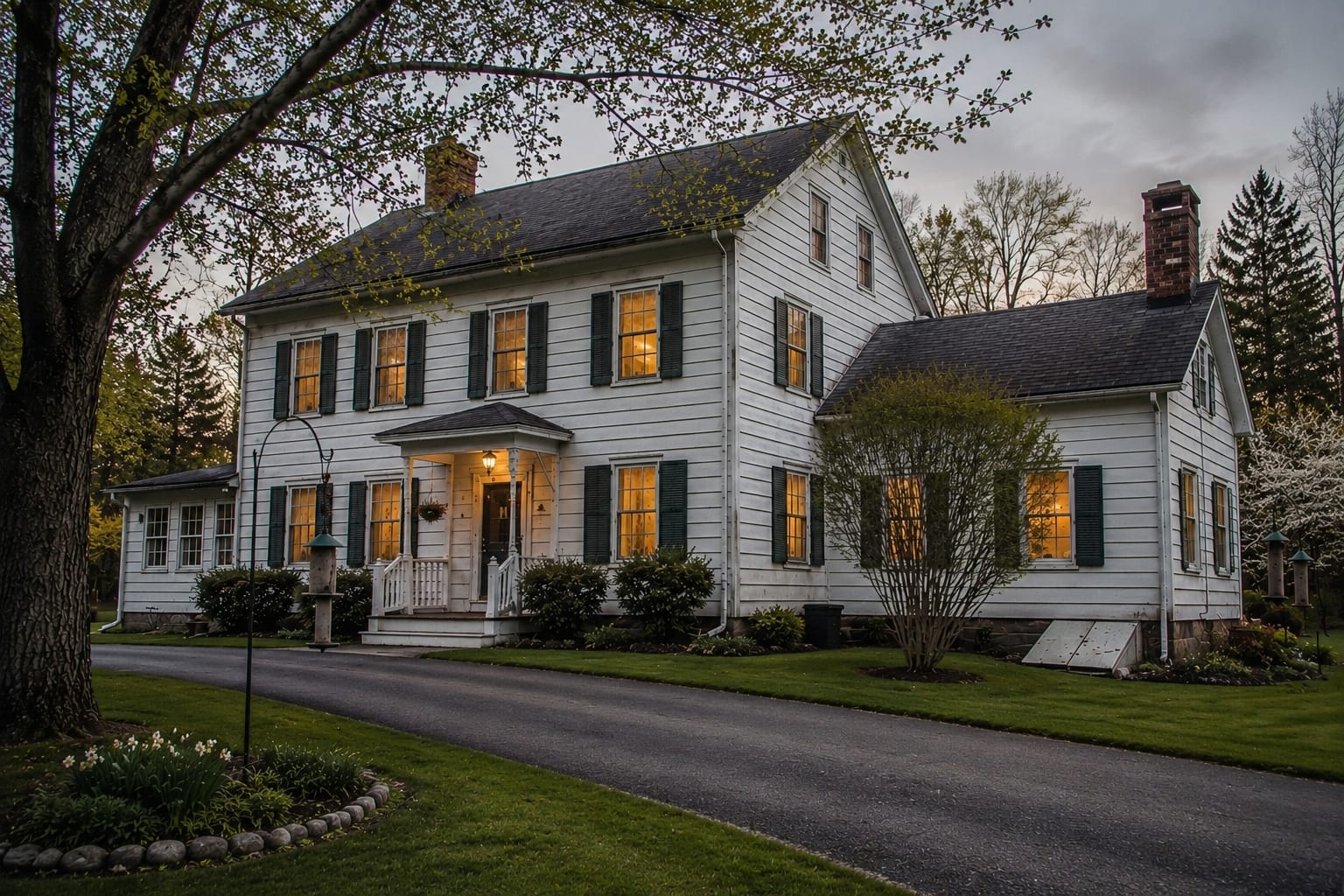
The house suited her.
Three stories.
Old.
Full of history.
Long before it became a family home, it had been a tavern.
Then a brothel.
Then eventually the place where I grew up learning that everything has a story if you’re willing to listen long enough.
Most people saw an old house.
She saw the lives that had passed through it.
The people.
The history.
The years.
Maybe that’s why vintage always made sense to me.
Not because I was drawn to old things.
Because I was raised by someone who understood that surviving something adds to a story.
It doesn’t subtract from it.
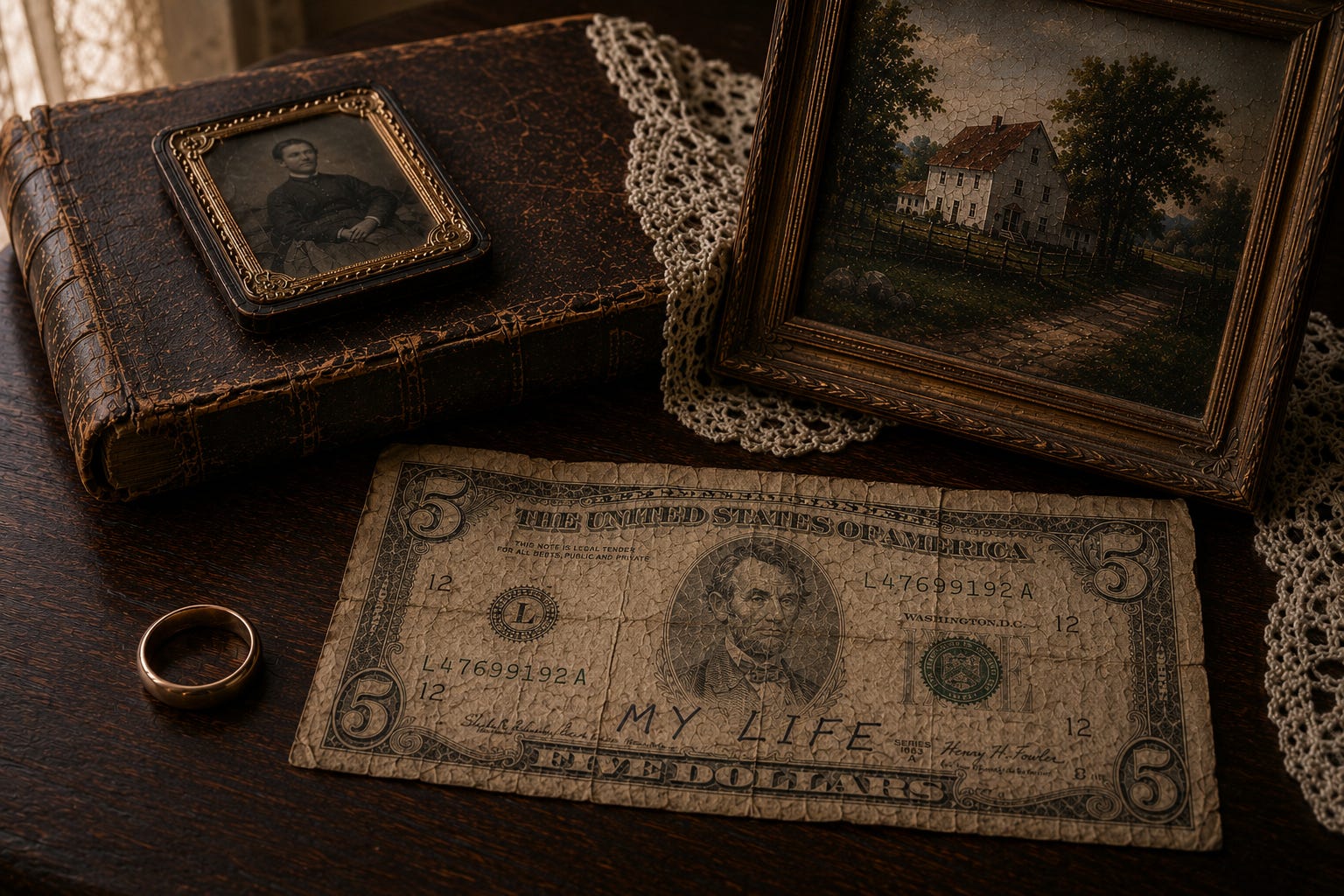
These days, I spend my time surrounded by the kinds of things she loved.
Old paintings.
Worn leather.
Jewelry with history attached to it.
Objects that survived long enough to become something more interesting than new.
Every once in a while, I’ll pick something up and hear her voice in my head.
“Look at the craftsmanship.”
“Check for a signature.”
“They don’t make them like this anymore.”
WIWO was never really about vintage.
Vintage was just the language.
The story was always the point.
Maybe that’s the inheritance I never expected.
Not the furniture.
Not the jewelry.
Not the mirror with my initials on it.
The perspective.
The ability to recognize value where other people overlook it.
The ability to understand that wear and worth are not the same thing.
That history matters.
That character matters.
That surviving something matters.
She warned me for years never to open a store.
I did it anyway.
And after enough late nights sourcing inventory, photographing listings, answering messages, packing orders, and doing all the things nobody sees, I can finally admit something.
She was right.
It is a tremendous amount of work.
But then again,
most things worth keeping usually are.
Love you, Gram.
Don’t worry.
I’m still giving them hell.
And yes…
You were right about the store.
— M.
Beautiful. Each piece has its own identity ❤️