
Professionalism as Containment
Some forms of professionalism are simply exhaustion with better tailoring.

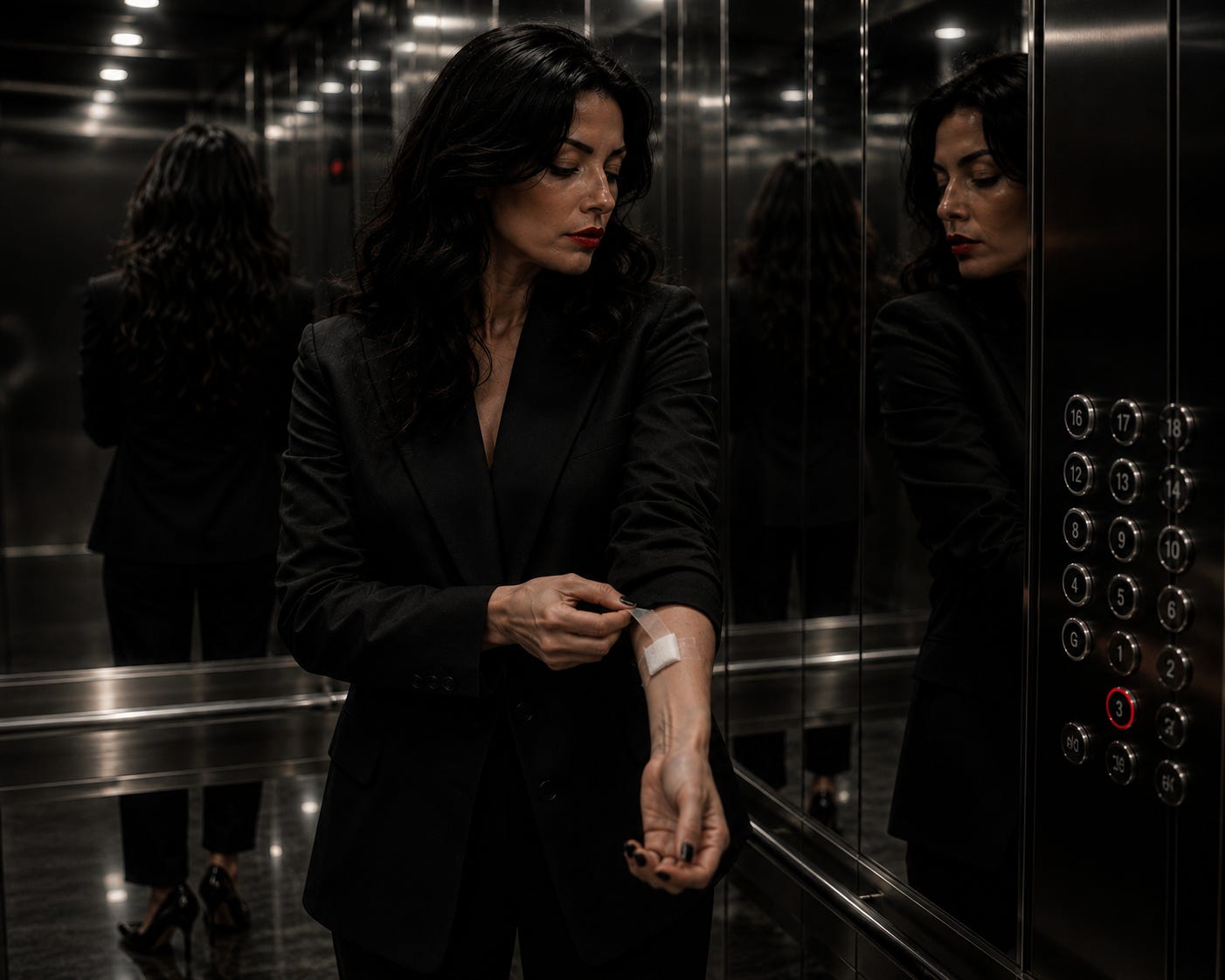
The mirrored elevator drops forty floors without a shudder.
Inside, the stainless steel panels reflect a version of professionalism so polished it borders on fiction. A woman adjusts the cuff of her silk shirt where it disappears beneath a charcoal wool sleeve, making certain the fabric covers the faint indentation left behind by medical tape.
She watches her reflection.
Waits for her eyes to settle.
Then the doors open.
Visible distress changes a room long before it changes a policy.
The shift rarely announces itself. Nobody stands up and says what they are thinking. The room simply becomes more efficient. Conversations shorten. Patience narrows. Concern becomes increasingly logistical.
The smile remains.
The collaboration does not.
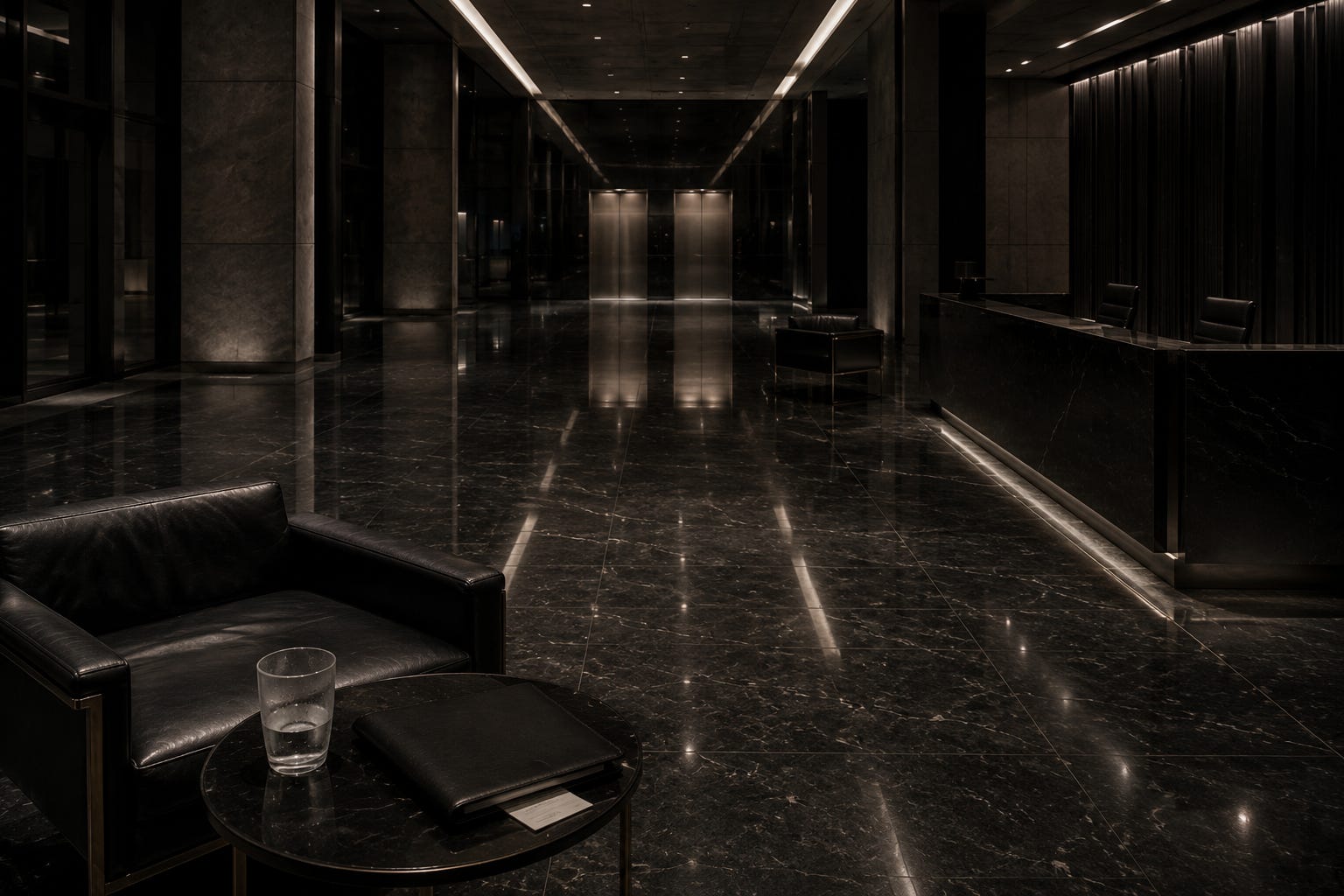
Some women learn restraint because visible overwhelm repeatedly altered their outcomes.
If you appear depleted, your judgment is treated as a symptom.
If you appear exhausted, your timeline becomes a liability.
The system routinely rewards the appearance of stability more aggressively than stability itself.
People trust calm women more than overwhelmed women, even when the overwhelmed women are more accurate.
Because of this, looking functional and being functional become completely separate negotiations.
Not because anyone says so directly.
Because rooms respond to appearances long before policies do.
Modern professional spaces remain remarkably accommodating, but only while they still believe a resolution is nearby.
The moment fatigue stops looking temporary, the atmosphere begins to cool.
Not openly.
Administratively.
The support remains technically correct.
The patience becomes conditional.
The room quietly reorganizes itself around your limitations without ever admitting it has done so.
People often become less patient before they become less polite.
That distinction matters.
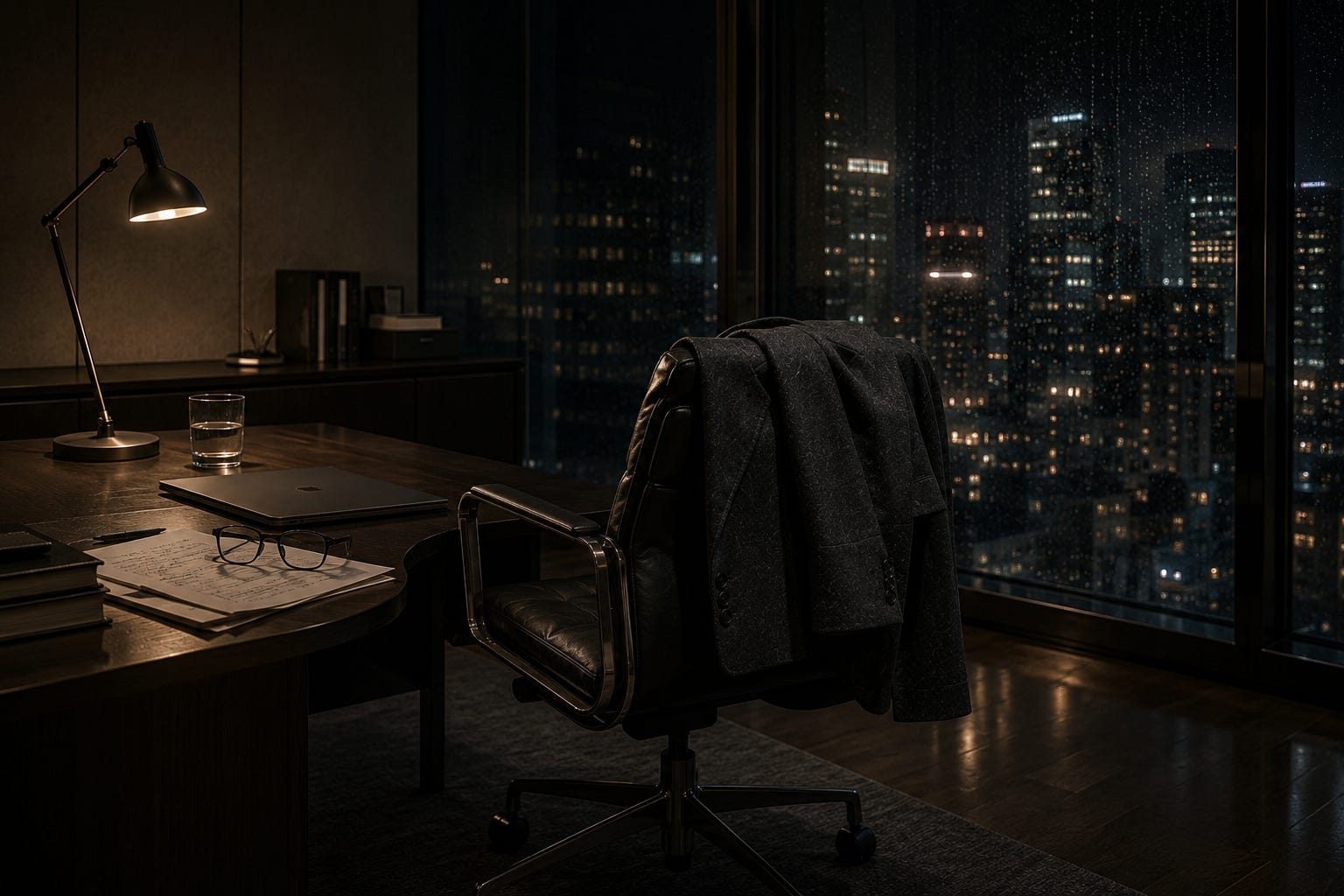
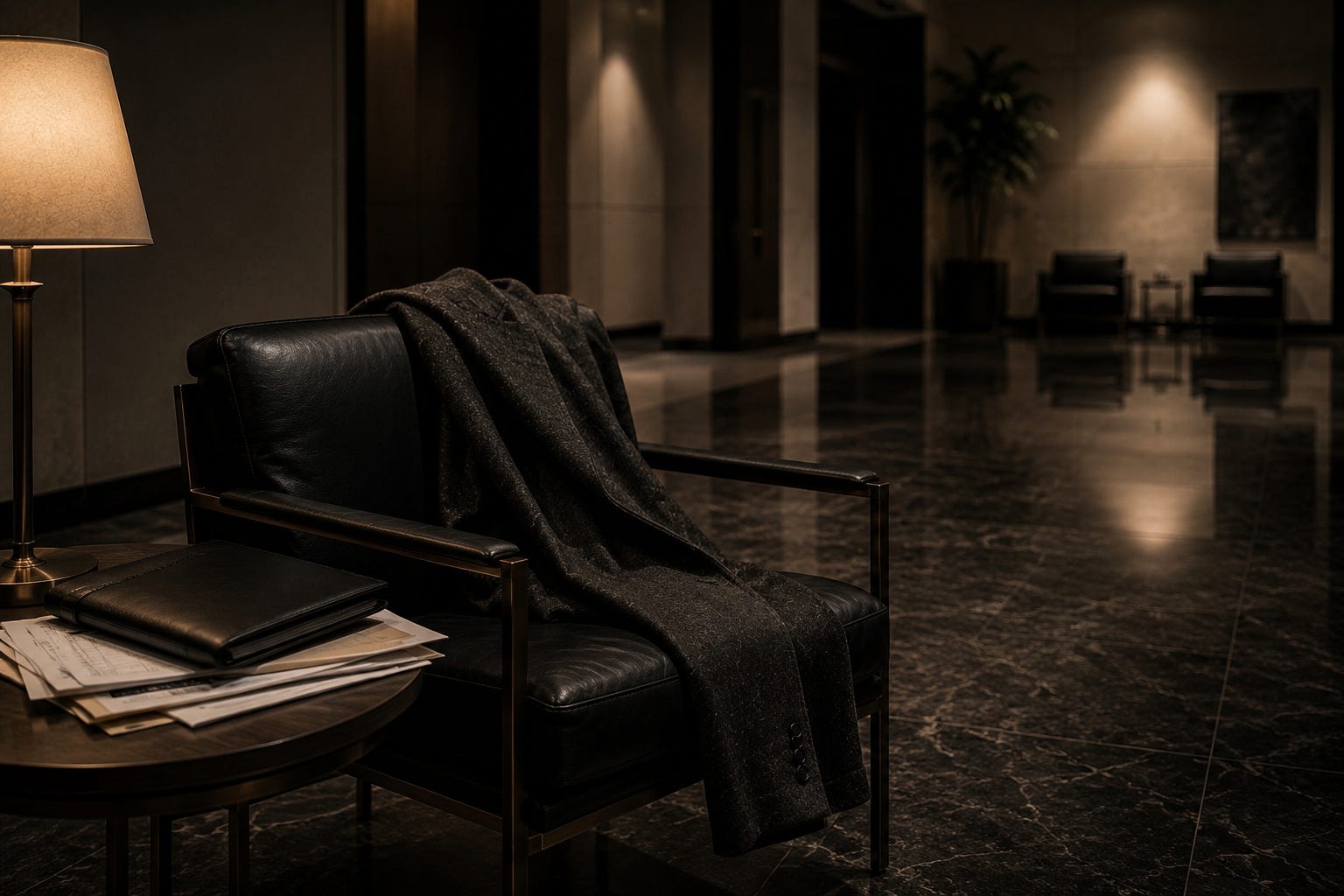
Some people begin using clothing as containment.
A structured jacket.
A heavy coat.
A perfectly pressed collar.
These objects are often mistaken for style.
Sometimes they are.
Other times they are architecture.
A wall carried into a room.
A way of ensuring that observers encounter the outline before they encounter the exhaustion.
The most elegant people in the room are not always thriving.
Sometimes they are simply protecting the quiet spaces where they are still allowed to fall apart.
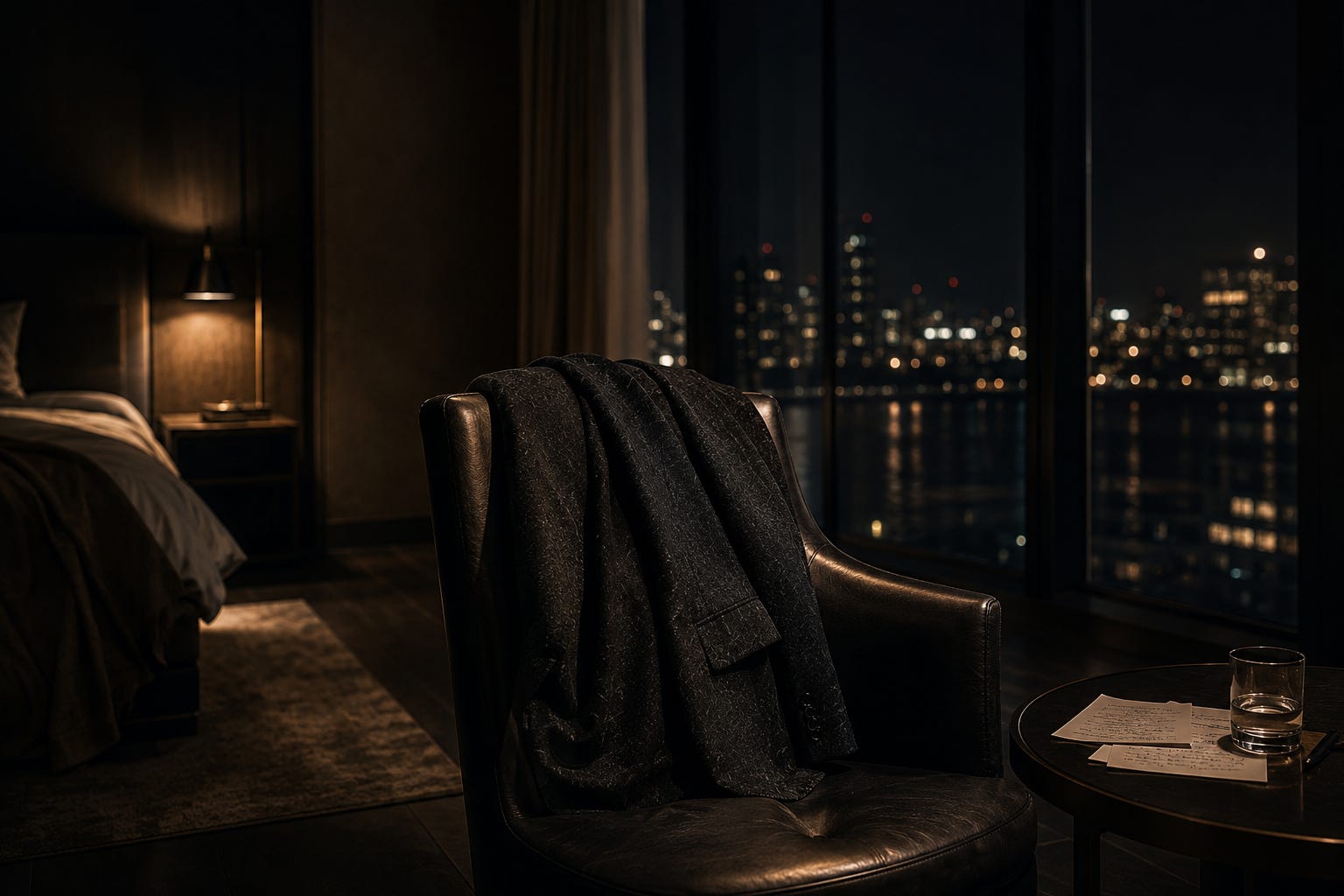
In the end, composure is often misunderstood.
People assume it is confidence.
Control.
Strength.
Sometimes it is.
Other times it is simply the final layer between a person and an environment that has already taken too much.
— M.
If you feel pressure to explain your exhaustion, resist the impulse.
Provide the information.
Not the explanation.
Not the reassurance.
Not the performance.
The two are not the same thing.