
Inheritance Without Permission
We spend our childhoods trying to slow our parents down, and our adulthood realizing we carry their pace.

My father has always given the same answer when people ask what he wants: Time.
Not money, not gifts, not things. Just time.
As a child, that answer used to frustrate me. On birthdays, Christmas, and Father’s Day, I would wonder how you were supposed to wrap time. The older I get, the more I realize it was never an inventory request; it was a philosophy. And the strangest part is that I think I’ve spent most of my life trying to manufacture it for him.
My father used to get in trouble at work because of me. I was three years old when I figured out the pattern:
whenever the envelopes arrived, he left.
I didn’t understand work orders, dispatch, or adult responsibility, but I understood that the mail meant my father went away.
So, I started hiding it.
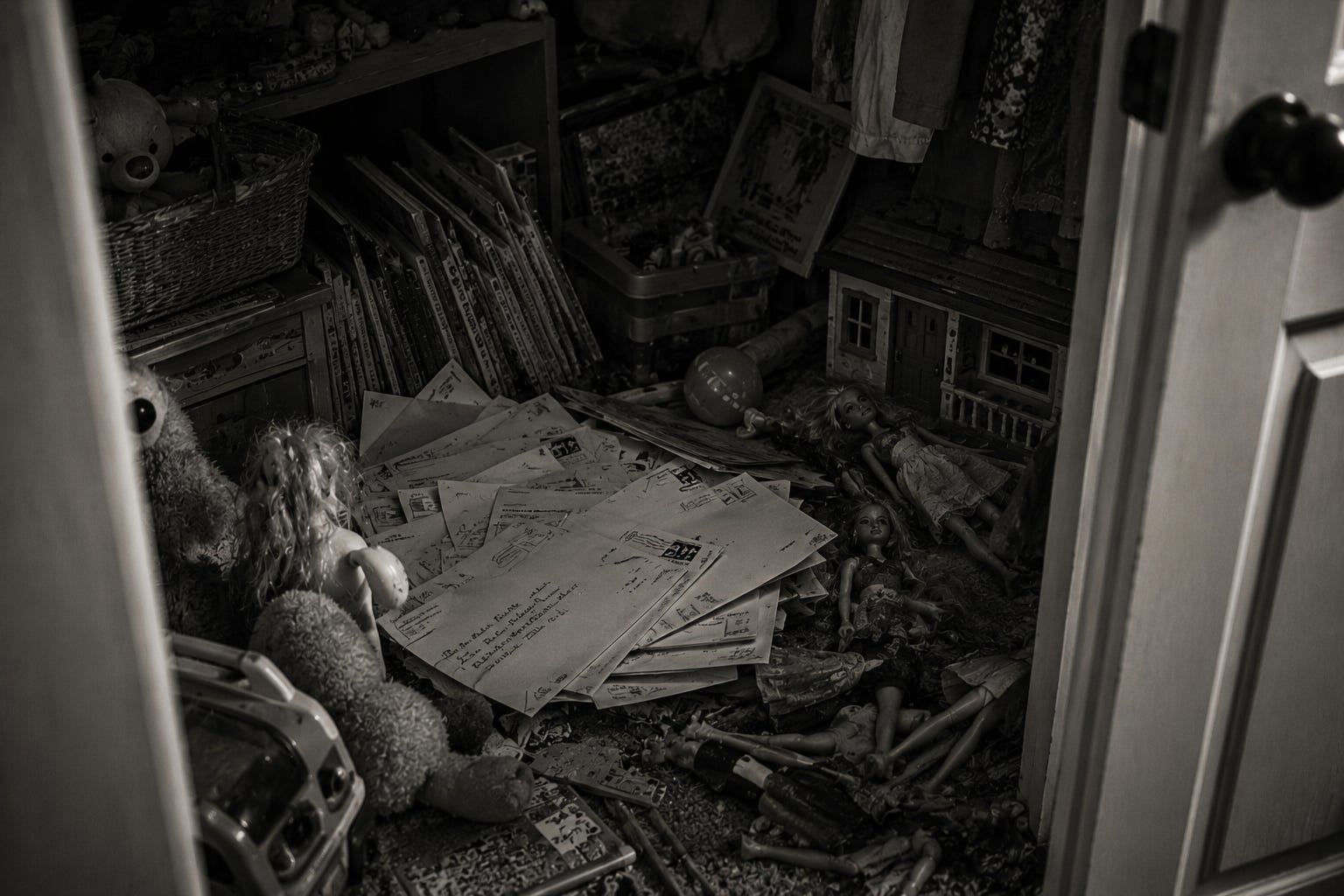
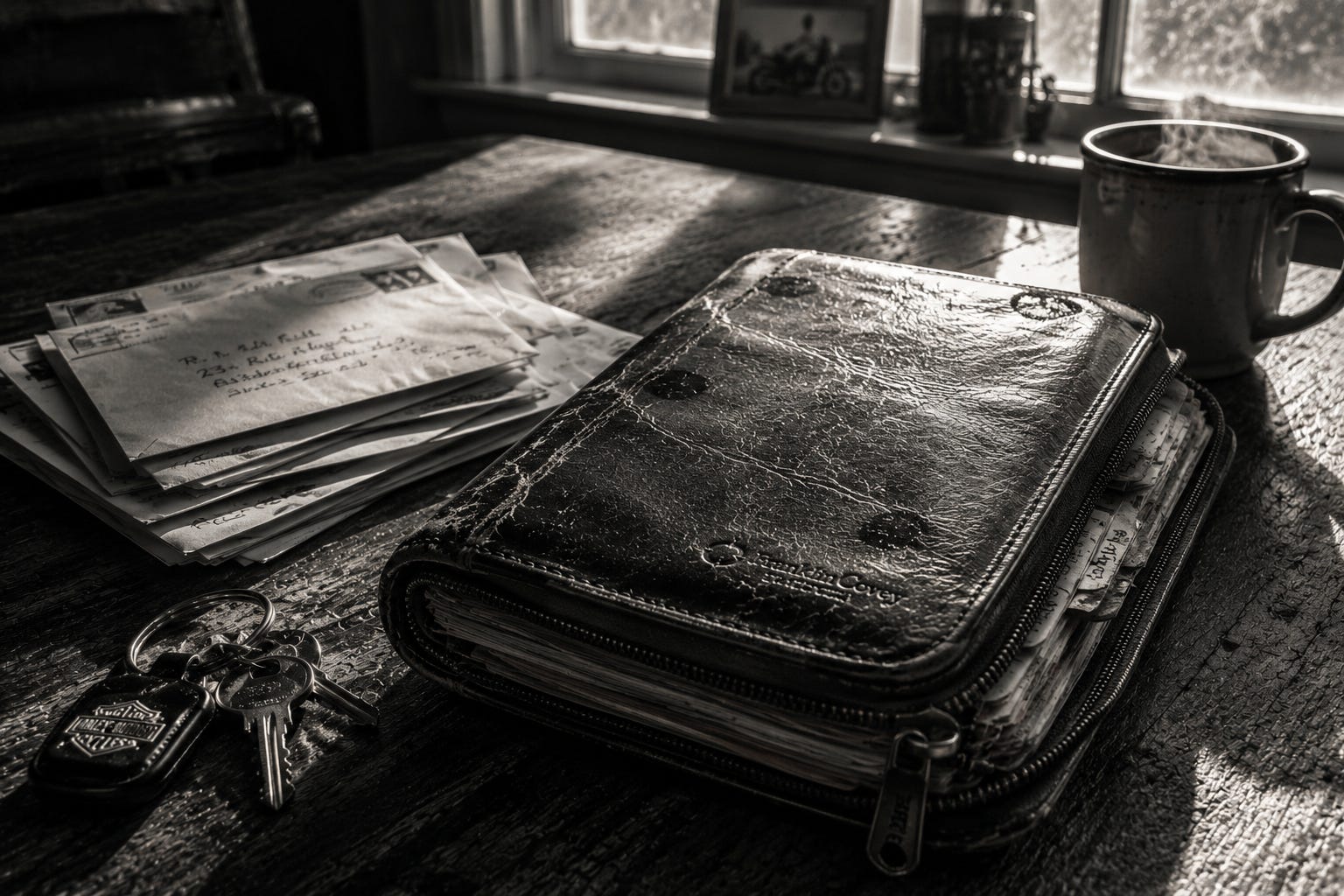
For months, his boss would call asking why he hadn’t shown up for jobs, while the missing assignments sat in my closet, sandwiched between plastic toys and children's books.
Looking back, it is funny in the way childhood can be funny only after it stops hurting. I wasn’t trying to cause trouble; I was trying to buy more hours. When my father finally caught me, his anger evaporated the moment he realized what I was doing. He softened immediately. It was my very first attempt at negotiating with time.
Every night when he came home, I would drop a heavy pile of books onto his size 14EEE boots.
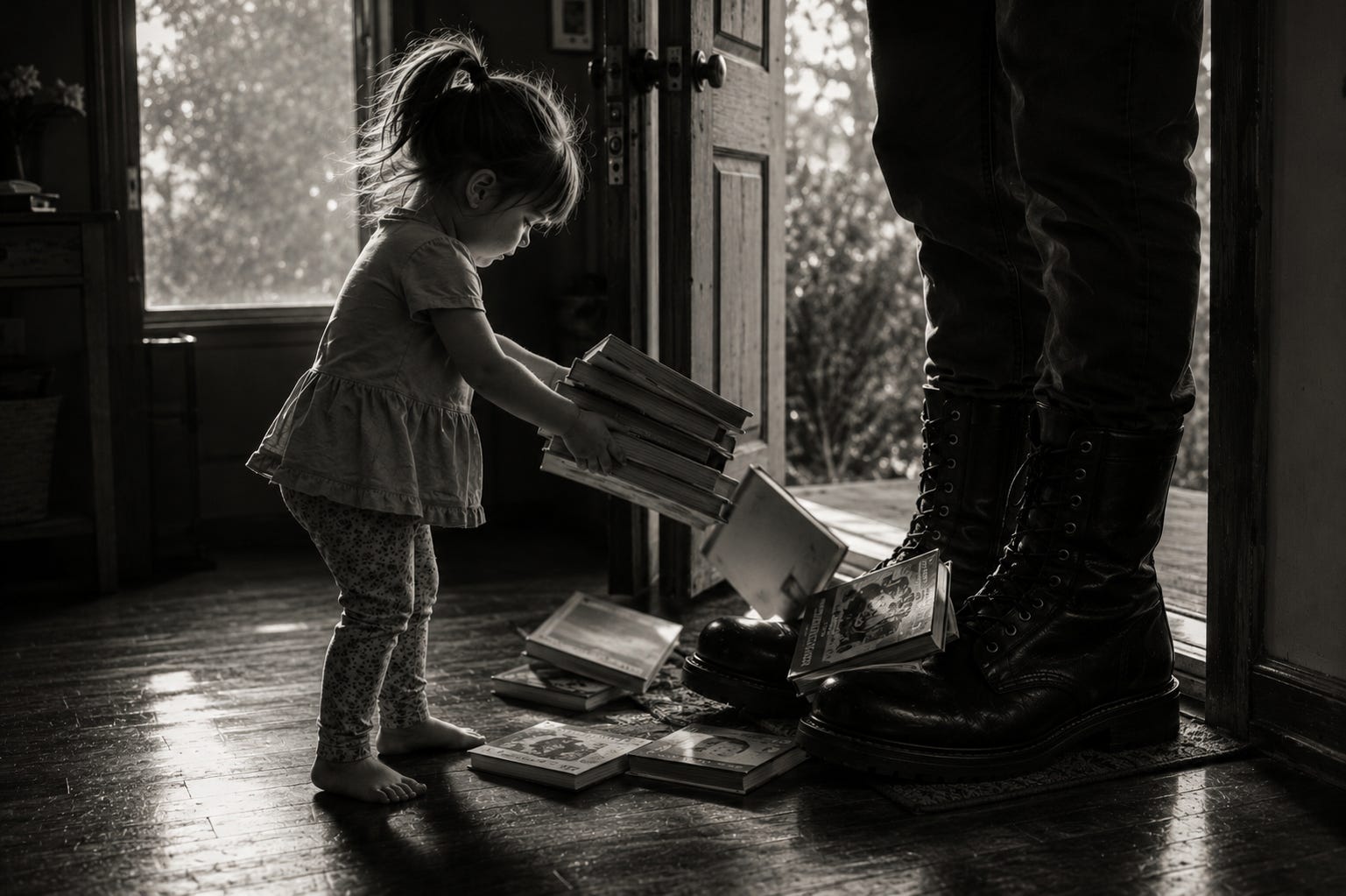
That was my signal:
read to me.
He always did.
My favorite was a giant book of fairy tales, which he read so many times that I eventually memorized the pauses, the cadence, and the exact words. Years later, my grandmother discovered I was continuing the stories before she even turned the pages. At the time, my family thought it was an early love for reading, but it was actually a stall tactic.
I wasn’t memorizing stories.
I was memorizing time.
One more page, one more chapter, one more excuse to keep the person I loved in the room a little longer.
When I was four, my father left. People hear that sentence and immediately fill in the blanks with the wrong assumptions. The truth is more complicated. Even as a child, I knew why he left, what he was trying to escape, and that the alternatives weren’t good. But understanding a decision and accepting its consequences are entirely different burdens.
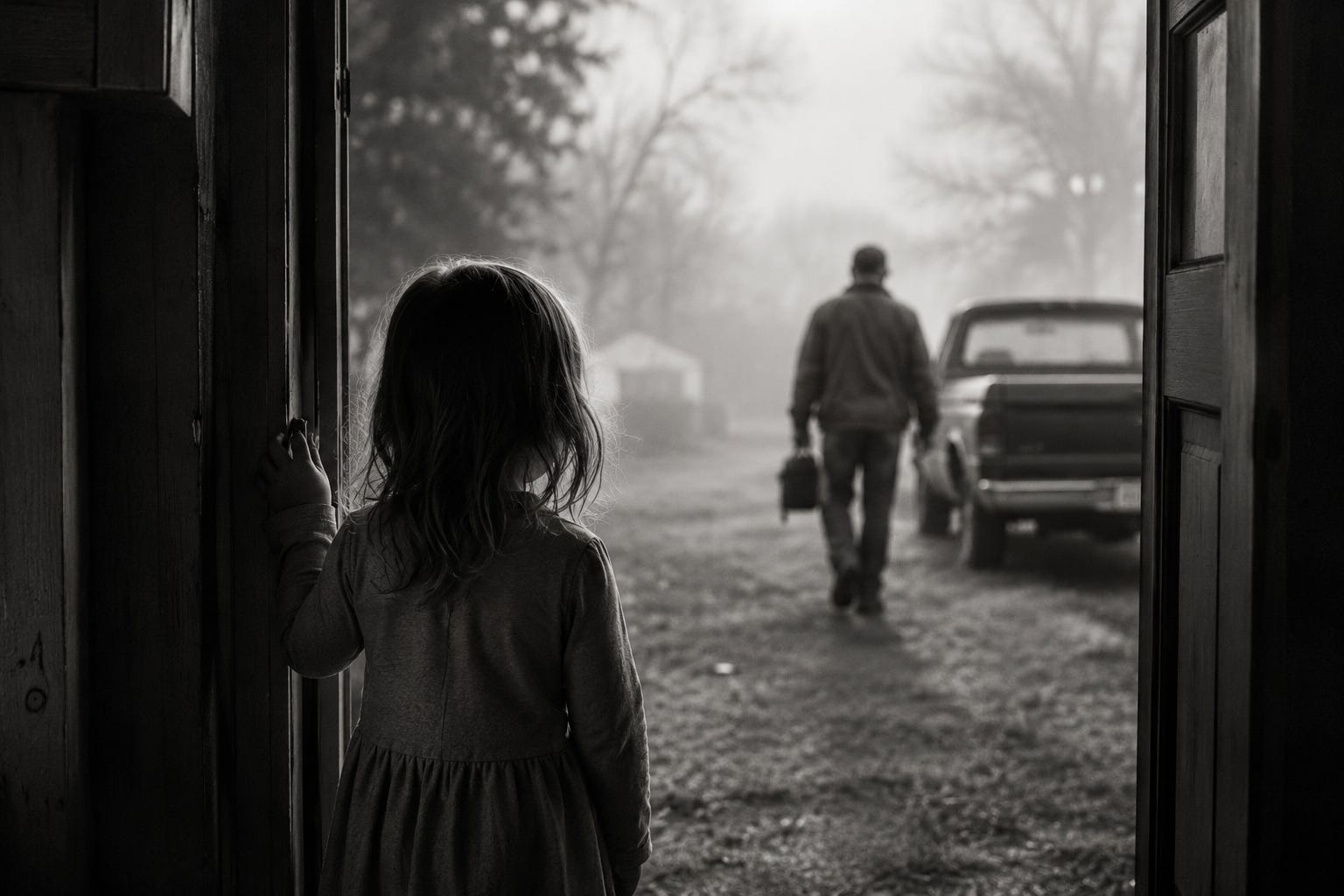
For years I resented him. Not because he left, but because he left me. Every so often, when the conversation drifted toward the past, I would say, “Yeah, but you got out.” I meant he escaped, forgetting that children don't experience the nuance of adult choices—they only experience the fallout.
It took me decades to understand that both things could be true at once: he could have been right to leave, and I could still be broken by his absence.
The strange thing is that life eventually gave me a perspective I never wanted. Years later, I found myself repeating his patterns, battling the same behavioral loops and impossible dynamics. Somewhere along the way, I realized the person who understood my skin better than anyone else wasn’t a therapist or a friend. It was him. For most of my life he was my father; as I grew up, he became a witness—the only other person on earth who knew exactly where I came from because he had survived it first.
Compassion came slowly for both of us—for the little girl who wanted her dad, and for the man who made a choice that hurt no matter which way he turned.
Some of our healing happened in the margins of my own achievements. The most profound healing happened in the margins of my own adulthood—in the moments when he saw what I had built, what I had survived, and finally said, “I’m proud of you.” Those milestones mattered, but they mattered most because they brought words I had waited years to hear.
I don’t think he knows how long I’d been carrying the empty space for those words before they finally filled it.
But time has a way of turning childhood bargains into hospital rooms.
In November of 2007, I turned twenty-two. I was working as a financial planner, managing other people’s wealth while my own time was suddenly threatened.
I got sick.
Not the lingering, predictable kind of illness, but a violent, sudden collapse that left doctors whispering in corners and counting hours. I had spent my entire childhood trying to freeze time; suddenly, time was freezing me.

That sterile hospital room was the first time I ever saw my father truly cry. Not a quiet, dignified tearing up, but the raw, unraveled weeping of a massive man who has suddenly run out of physical things to fight.
He spent those nights curled up on a yoga mat on the linoleum floor just to stay near me. It remains an impossible image: a 6'6" presence who spent his life anchoring everyone else's world, reduced to a makeshift gym mat under harsh fluorescent lights. For the first time in decades, the gravity of the room forced him to sit alongside my mother. All the old history, the bitter divorce, and the decades of complicated silence dissolved into the background.
None of it had teeth anymore.
The only currency left was time. In that hospital room, I realized this wasn’t just a story about a daughter trying to keep her father. It was a story of a terrified father holding his breath, fighting like hell to keep his daughter.
For the last five years, we’ve held a standing Saturday morning breakfast. Same day, same time, same booth, before most of the world is awake. The staff knows our names and our orders. We cover politics, family, business, and life, followed by an hour of television. The conversations shift, but the ritual is unyielding. Because these breakfasts didn’t begin in childhood, they are entirely voluntary. It means the most meaningful relationship in my life isn’t just one I inherited; it’s one we actively built.
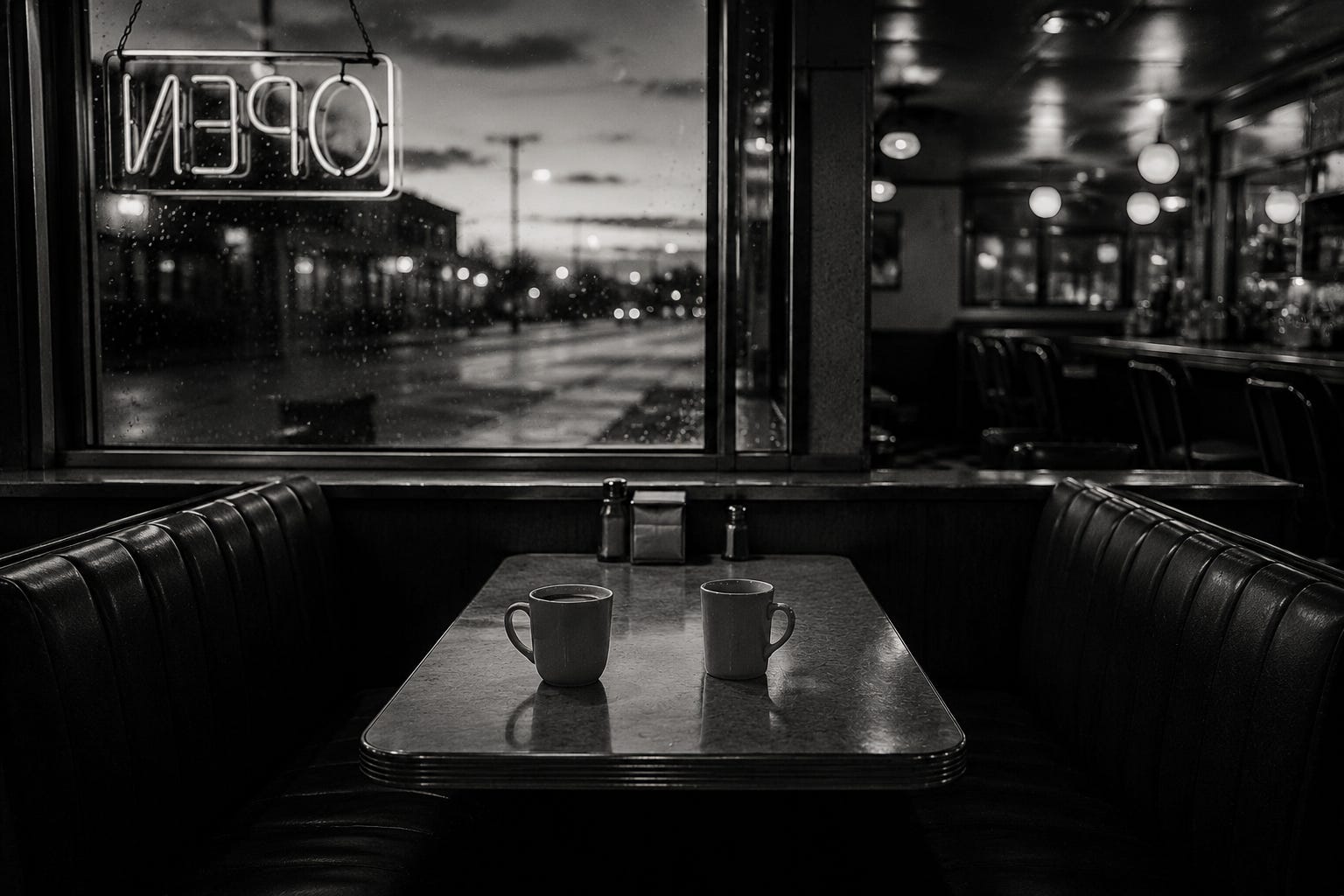
For most of my life, I knew my father. These last five years are when I’ve actually gotten to know him.
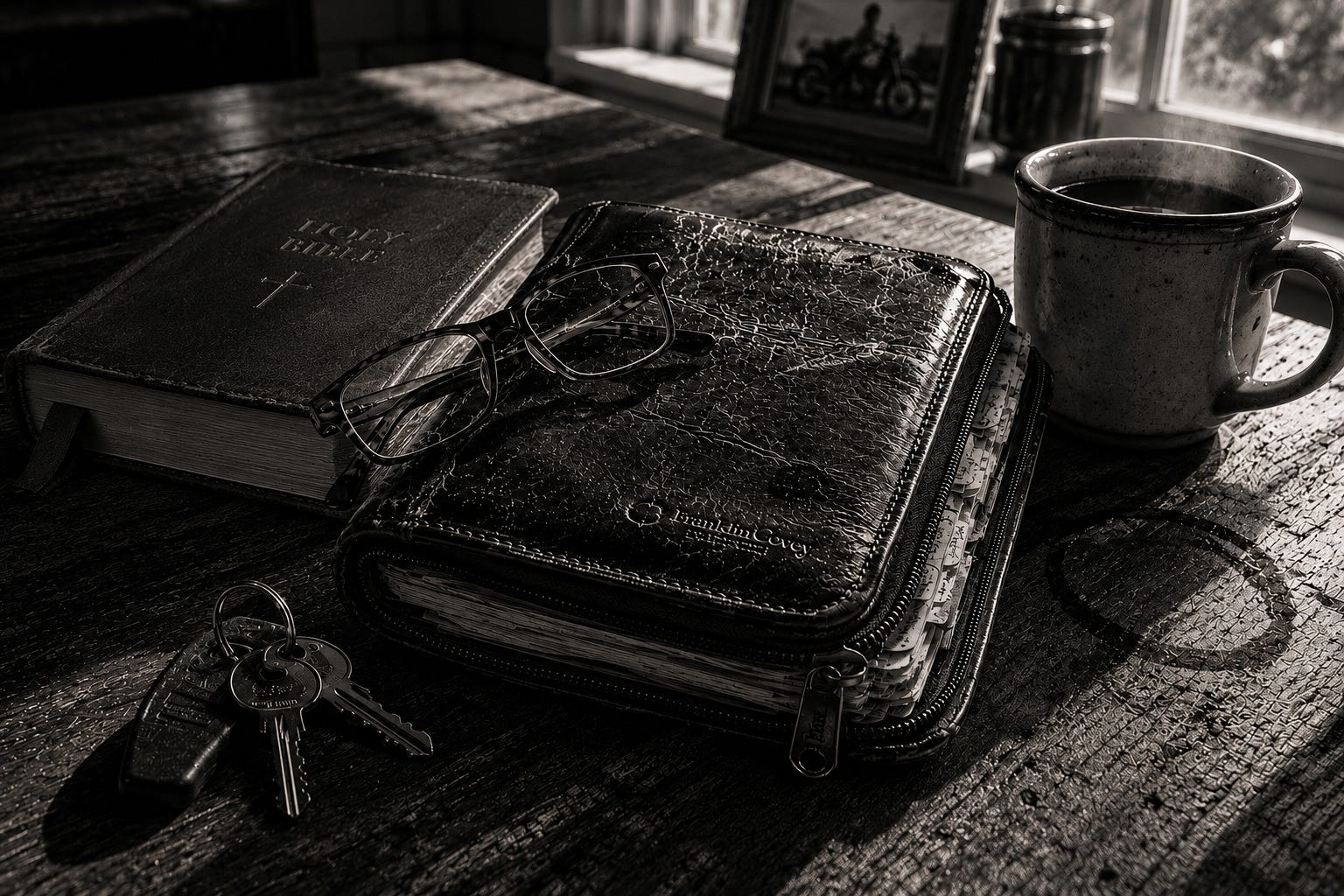
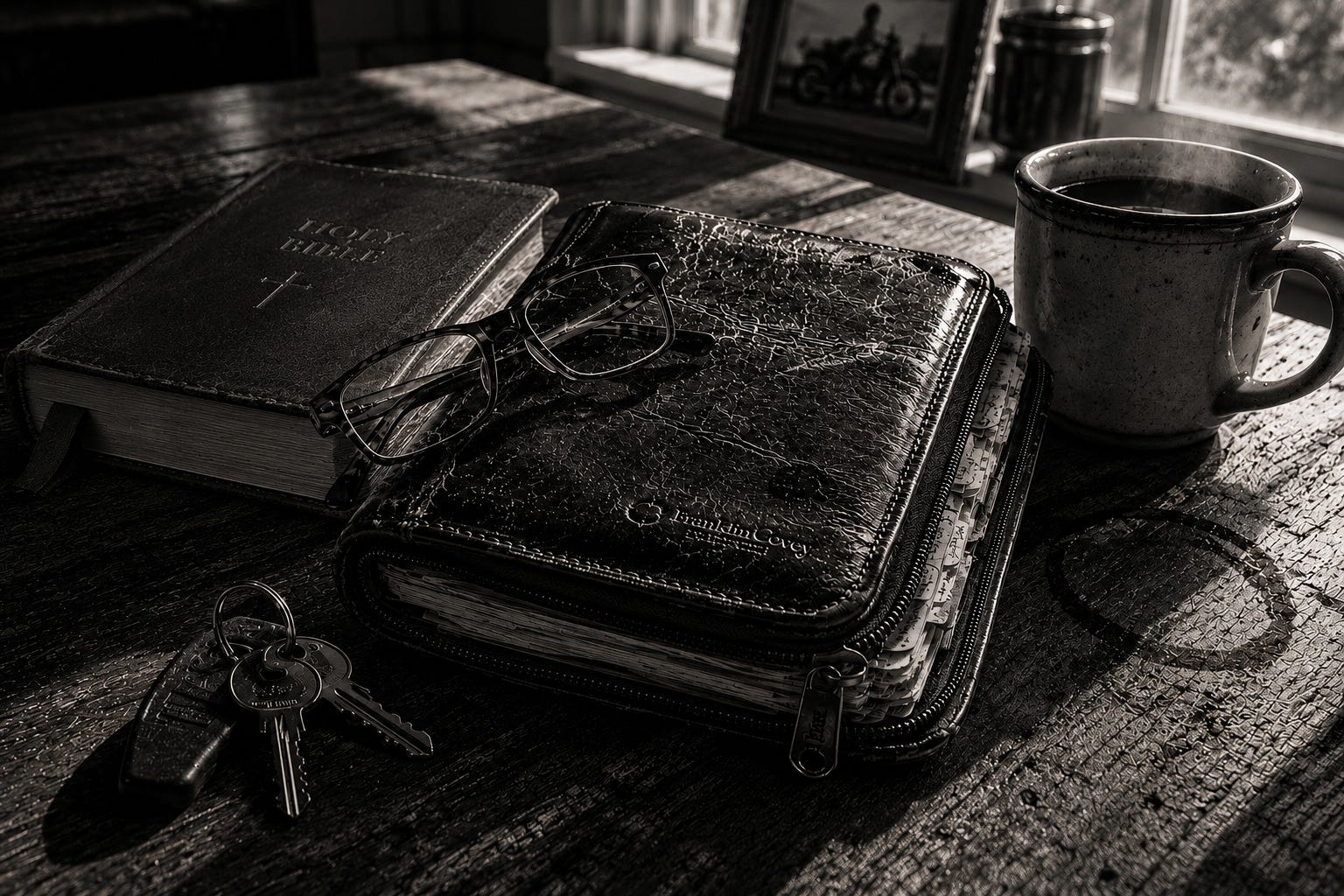
When I think about him now, I think about the architecture of his routines. I think about his black leather, zip-around Franklin Covey planner, its edges worn soft and its pages stained with coffee. He has carried it everywhere for more than forty years. Saturday evening church, Sunday motorcycle rides, Saturday morning breakfasts—these commitments are repeated often enough to become the scaffolding of his life. For years I thought they were just habits. Now I know they are promises.
My father is a presence. He walks into a room and people notice. Almost everyone I meet eventually tells me, “Your father is a great guy.” Sometimes complete strangers say it. Once, a man heard me speaking from across a lobby, walked over, and asked, “Are you Rich’s daughter?” We didn’t even have the relationship we have now, which meant something had already been passed down through my voice before I could even claim it. Not advice, but an atmosphere—the way he carries himself, the way he treats people, the way he moves through the world.
I used to think inheritance was about physical resemblance. Now I know it’s about the air you leave behind in a room.
Every Sunday, I ride motorcycles with him and his friends. Watching them has taught me something the world rarely discusses. Society spends a lot of time defining masculinity, but very little time celebrating reliability, loyalty, and quiet friendship.
These are men with leather jackets faded perfectly by decades of sun, rain, and miles. Men who know each other’s stories so well they no longer need to tell them, but still do. Men who continue showing up for each other, road after road, breakfast after breakfast, year after year, long after anyone is left to applaud it.
One of my favorite parts isn’t even the riding. It’s watching my father stop carrying the weight of everyone else’s needs for a few hours. Watching him sit with old friends, laugh at stories I’ve heard a dozen times, and think about himself instead of all the responsibilities waiting for him at home. There is something profoundly moving about seeing the people who spent their lives taking care of everyone else finally become ordinary for a morning.
Yet every Sunday they show up anyway, proving that loyalty is not something you say. It’s something you schedule.
Every Saturday morning, my father makes me coffee: a strong French press cut with eggnog and honey. It is the kind of sweet, heavy brew that would horrify a purist, but it tastes exactly like Saturday morning to me.
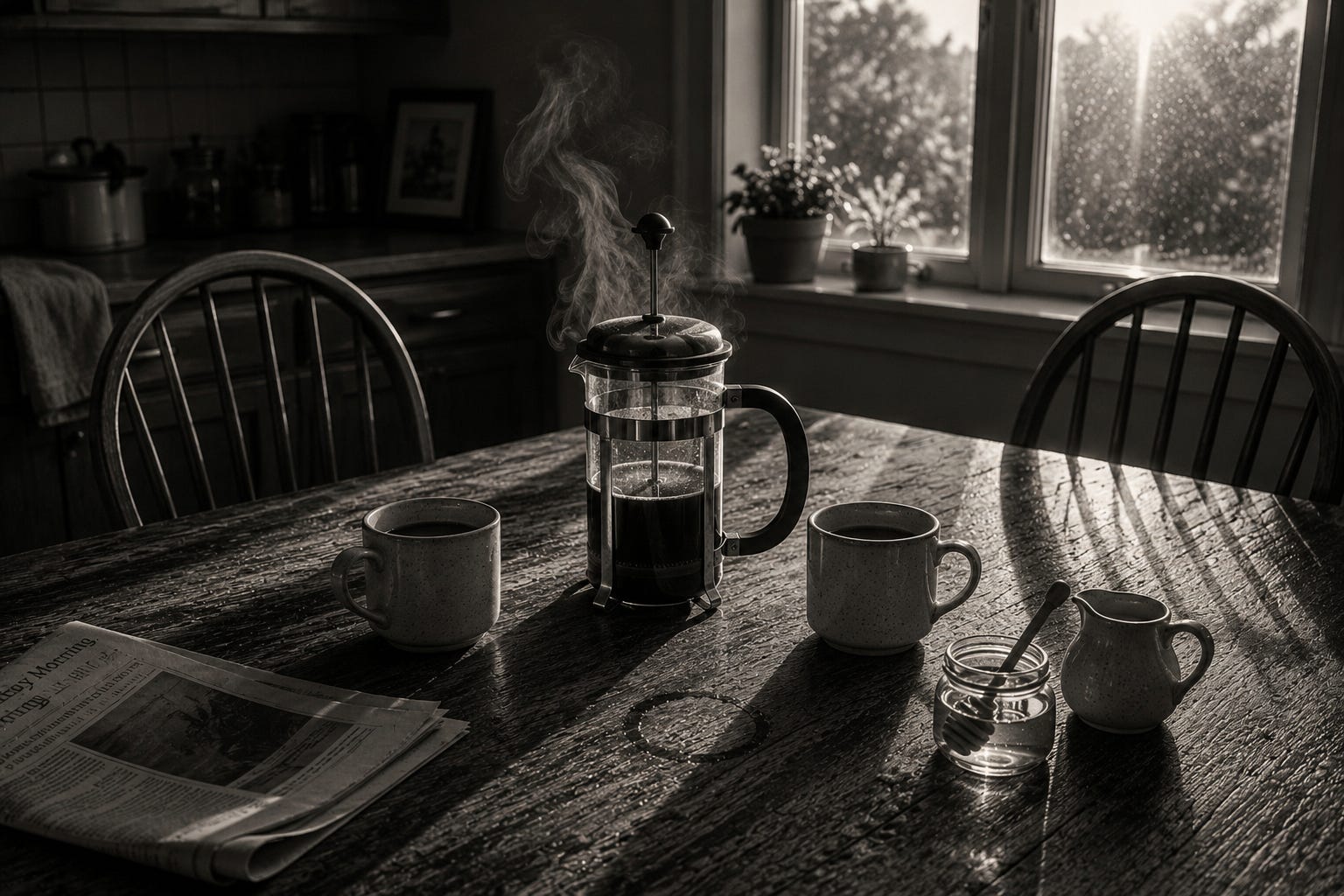
Recently, as he pressed the filter down, he asked if I was going to keep making it after he was gone. He didn’t ask if I wanted another cup; he asked if I would continue the tradition. His tone was matter-of-fact, the quiet voice of a man who had been sitting with a thought for a long time. The tears came immediately—the kind that arrive before you have time to negotiate with them—so I left the kitchen before he could see. Because suddenly, it wasn’t coffee anymore. It was inheritance.
That is what I’ve been trying to parse all along. Not just fathers, and not just loss, but the things people pass down without realizing they are doing it. A cadence of speech, a standard of integrity, a Saturday ritual, a specific cup of coffee. The older I get, the less interested I am in what people intentionally write into their wills. I am entirely consumed by what remains without their permission—the habits, the routines, the atmosphere that quietly survives them.
My father spent my childhood saying all he wanted was time. Now, I catch myself telling my own clients the exact same thing: Time is your most valuable asset. His favorite answer became my deepest truth. I have been trying to answer his request my entire life—first with hidden mail, then with children's books, then breakfasts, motorcycle rides, and now, a cup of coffee.
Maybe that’s what inheritance really is. It’s not receiving a gift; it’s carrying a weight forward.
The answer to his question, of course, is yes.
Yes, I will keep making the coffee. Not because of the recipe, but because some promises become traditions, and some traditions become the people we keep inside us. If one day you find me in a quiet kitchen on a Saturday morning, pouring eggnog and honey into a strong French press, it won’t be because I love the taste. It will be because my father became part of the way I move through the world, and I still have a lot of time left to show him.
— M.
❤️❤️❤️